

–LiMA-LFA Deal Raises Questions Over Public Funding
By Alexander Nyeneken
September 19, 2026
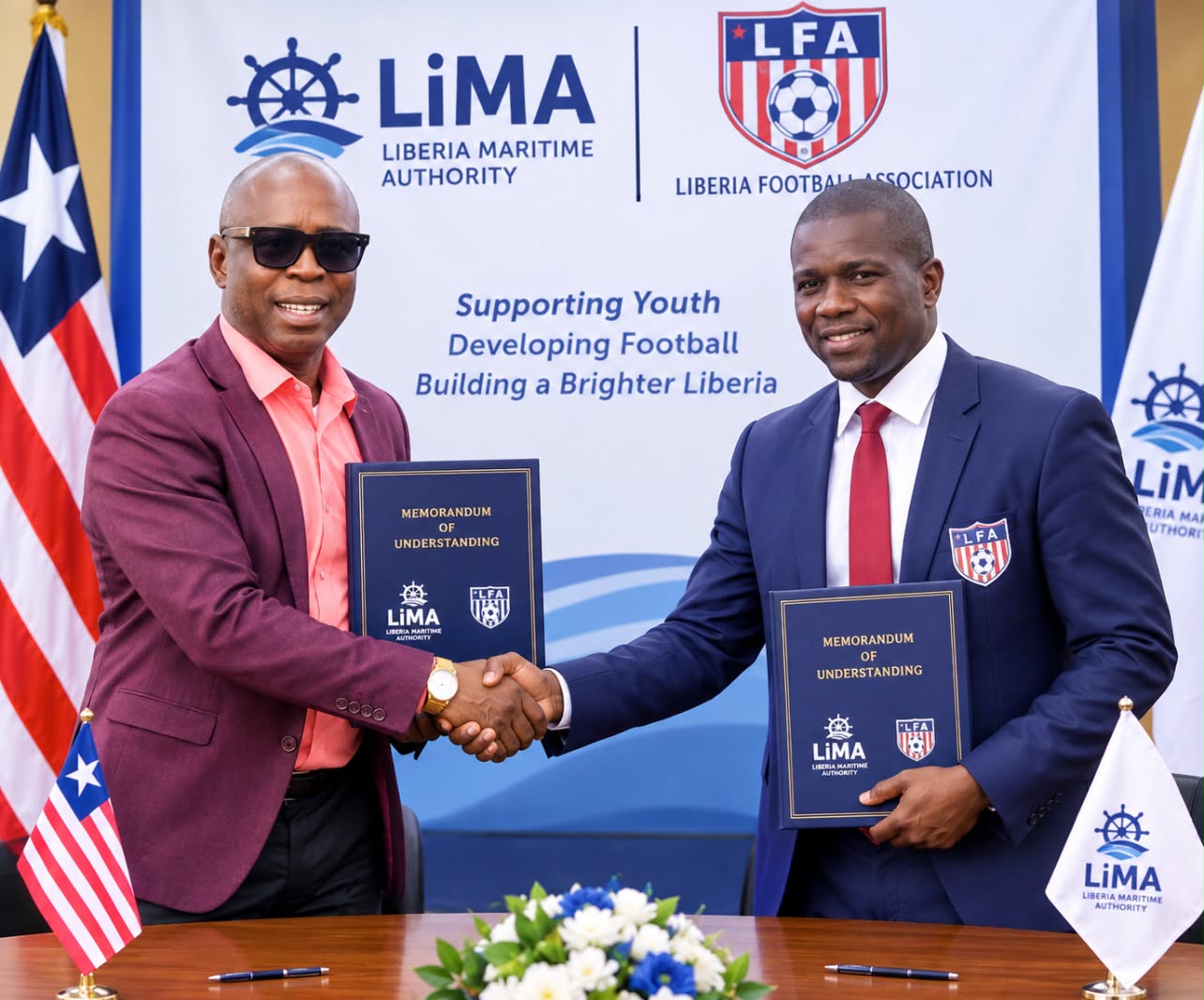
The Liberia Maritime Authority (LiMA) has committed US$500,000 to support football and youth development under a one-year, renewable partnership with the Liberia Football Association (LFA).
The agreement, formalized through a Memorandum of Understanding, divides the funding equally between the Ministry of Youth and Sports and the LFA.
Under the arrangement, US$250,000 will go to the Ministry of Youth and Sports, while the remaining US$250,000 will be provided directly to the LFA to support Lone Star operations and grassroots football academies.
LiMA Commissioner Neto Zarzar Lighe, Sr. says the investment is not only about football, arguing that sports can provide opportunities for young people and help address challenges confronting at-risk youth.
But the use of funds from a government institution for sports development also places emphasis on transparency, oversight and measurable results.
The LFA says the contribution is historic, with President Mustapha Raji describing it as the first major direct financial contribution of its kind from a government institution to Liberia’s football governing body.
The timing of the agreement is significant, as Liberia prepares for the 2027 Africa Cup of Nations qualifiers, with the Lone Star drawn in Group K alongside Mali, Cape Verde and Rwanda.
Beyond the national team, the partnership is expected to support the expansion of gender-inclusive football academies across Liberia.
The agreement raises broader questions about how the US$500,000 will be administered, what specific targets have been established, and how the public will be able to assess the impact of the investment when the one-year agreement expires.
The deal also comes amid growing commercial activity in Liberian football, with domestic clubs reportedly generating nearly US$500,000 in player-transfer revenue in 2025.
As LiMA and the LFA begin implementing the agreement, attention will likely focus not only on the performance of the Lone Star but also on whether the investment delivers tangible benefits for grassroots football, youth development and women’s participation in the sport.
