

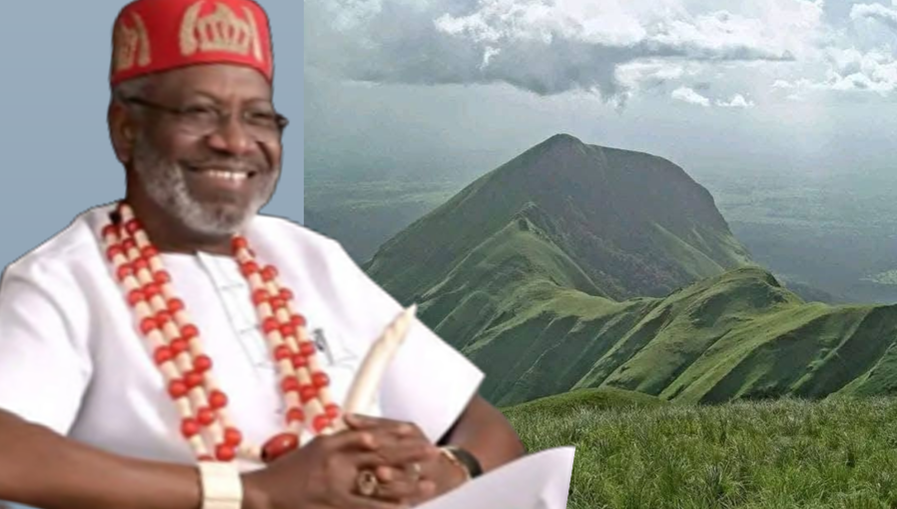
By Chief William Deah Deiyan Towah, Ph.D.
I welcome the renewed attention being given to the Gedeh/Putu Mountain Iron Ore Project in Grand Gedeh County. For many of us from Grand Gedeh, the possibility of this project coming back to life brings real hope that it will create jobs for our young people, open opportunities for our local businesses, improve our roads and other infrastructure, generate revenue for government, and contribute to the development of Grand Gedeh and Liberia as a whole. But while we welcome this opportunity, we must also be honest about the concerns that come with it because we have been here before.
The people of Grand Gedeh have lived through an earlier arrangement concerning the Putu project, and many of our people felt that they were not sufficiently included in decisions concerning a major natural resource located in their own county. Whatever lessons we may draw from that experience, one thing should be clear, that we should learn from what happened before and make sure we do things differently this time.
This is why I fully agree with some Grand Gedeans. They welcome the progress being made by Africa Metallic Resources Inc. (AMR) toward the Putu project. However, they rightly caution that successful mining requires more than agreements with the central government in Monrovia. It is essential for AMR to build relationships with the people and institutions of Grand Gedeh from the beginning. This includes independent professional bodies, county authorities, communities, traditional leaders, youth, women, and other stakeholders.
As a diplomat and public policy expert, I have had the privilege of seeing development projects across Africa, and I have seen initiatives with good intentions, significant investment, and great promises that fail to deliver because the people who were supposed to benefit were left out of the process. When legitimate community concerns are ignored or communication comes too late, a project that should unite a region can instead become a source of mistrust and conflict, and we cannot afford to let Putu become another missed opportunity.
The original Putu Mineral Development Agreement dates back to 2010, but Liberia today is not the Liberia of 2010. Our laws have evolved, our institutions have developed, and our people’s expectations have grown alongside landmark legislations like the Land Rights Act of 2018, which means our understanding of environmental protection, community participation, local content, and transparency has matured beyond the mindset of 2010. Let me be clear, I am not calling for Putu to be stopped, as I want Putu to succeed, I want investment to thrive, our youth to secure decent employment, and our county to gain better roads, schools, health facilities, electricity, and water systems.
However, we must ensure the investment is structured to deliver lasting benefits, meaning our people deserve total clarity on the legal agreements governing the project, land rights and community protections, environmental safeguards, employment, training, local business procurement, infrastructure commitments, and transparent grievance-handling procedures, which are the basic rights of any community hosting a major natural resource investment. Achieving this requires a truly inclusive approach. Our professionals must help translate complex legal agreements and provide a contextual voice so that the public, traditional leaders, women, and youth have a say in shaping decisions.
Furthermore, local businesses and professionals must be equipped to evaluate local impact, while civil society and the diaspora bring their networks and accountability frameworks to the table. Finally, the Government of Liberia and the investor must prioritize open, continuous dialogue right from the start.
We can welcome investment while demanding transparency, we can champion job creation while ensuring our people are treated as true partners and stakeholders rather than mere spectators, and we can ensure that Putu becomes a transformative opportunity to address longstanding developmental challenges across Grand Gedeh rather than a missed chance. Let us learn from the past without letting it hold us back, let us welcome responsible investment without losing our voice, and let us ensure Putu’s next chapter is built with the people of Grand Gedeh rather than simply announced to them.
