


–NIR Exe. Dir. Says It’s For Disadvantaged and Unemployed Citizens
By Mensouhn Mendin
September 16, 2026
The Executive Director of the National Identification Registry, Andrew Peters, has clarified that the institution will provide free national identification cards only to disadvantaged and unemployed citizens, and not to the entire population as is being speculated.
Speaking to journalists in Monrovia on Tuesday, September 15, Peters said employed citizens and foreign residents will be required to pay a fee to obtain the National Identification Card.
According to him, the Registry needs US$54.7 million to carry out the program, particularly to provide free identification cards to disadvantaged and underprivileged citizens.
Peters said the initiative is intended to ensure that citizens are uniquely identified when accessing services and conducting transactions across the country.
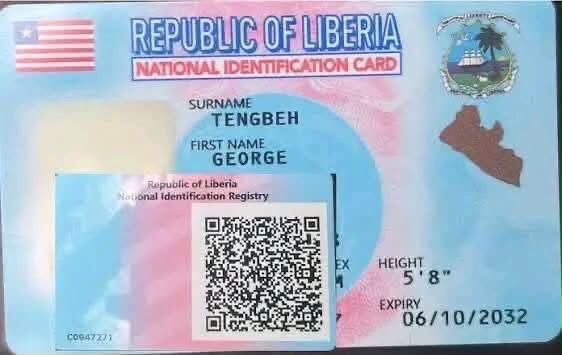
He explained that the national ID card will make it easier for citizens to access services in sectors including health, education, banking and business, as well as services provided by various government ministries and agencies.
The NIR Executive Director also said the identification system will help establish a traceable record of citizens across Liberia’s political subdivisions.
Meanwhile, Peters disclosed that the Registry will begin full implementation of the program once the agreement currently before the Legislature is ratified.
He said the institution has already started a mapping exercise aimed at decentralizing NIR services and making registration more accessible to citizens across the counties.
Peters also sought to clarify concerns surrounding the security of citizens’ personal information, particularly speculation that the data could be exposed to OSD, the company expected to finance the upcoming enrollment process.
He further explained that OSD’s role will be limited to investing in the country’s information and communications technology infrastructure, while the NIR will remain responsible for the registration process and the custody of citizens’ data.
