

As former President George Weah, Alexander Cummings, Simeon Freeman and other opposition leaders agree to work together, there are more questions being raised over structure, leadership and political direction remain of the opposition political parties’ collaborative effort. Our News Editor Konah Rufus reports
Liberia’s opposition landscape is entering a new phase, with several major political parties choosing cooperation over isolation and promising to speak collectively on issues they say are affecting the country.
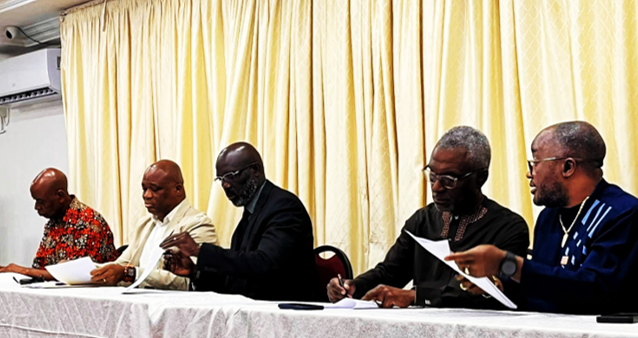
The development followed a closed-door roundtable in Sinkor, where five opposition political leaders signed a joint communiqué committing their parties to work together on national issues. Those signing the document were former President and CDC Political Leader George Manneh Weah, ANC Political Leader Alexander B. Cummings, MPC Political Leader Simeon C. M. Freeman, ULDP Political Leader Jonathan A. Mason and MOVEE Political Leader Dee-Maxwell Saah Kemayah.
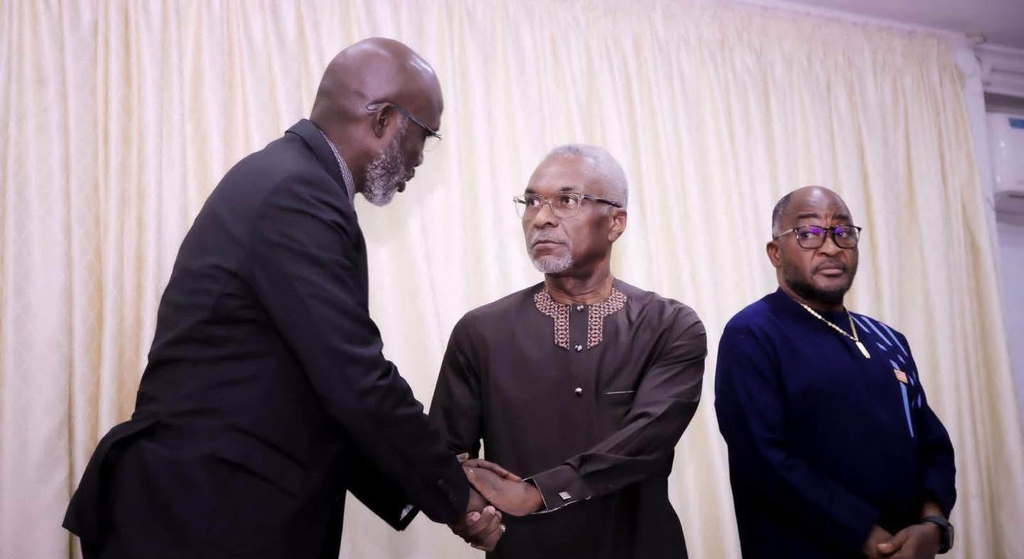
But the new arrangement is being presented carefully. The leaders say they are not, at this stage, forming an electoral alliance or deciding who will occupy the presidential or vice-presidential slots in the 2029 elections. Instead, they describe the cooperation as an effort to collectively engage the government, listen to citizens and raise concerns about national governance.
For Cummings, the immediate question is accountability.
He says the cooperation responds to what he describes as a desire among Liberians to see opposition leaders work together for the national interest. According to Cummings, the parties want to hold the Boakai administration accountable while also presenting solutions and alternatives to the challenges confronting ordinary Liberians.
Cummings has stressed that the arrangement is not currently an electoral alliance, although he acknowledges that it could eventually develop in that direction. For now, he says, the focus is on putting pressure on government to ensure that national resources and public institutions produce benefits for ordinary citizens.
The structure, however, is deliberately different from a traditional political merger.
The participating parties are maintaining their individual identities, logos and supporters while cooperating on issues they consider common concerns. Freeman says the arrangement allows each party to contribute its particular strengths while working collectively on broader national challenges.
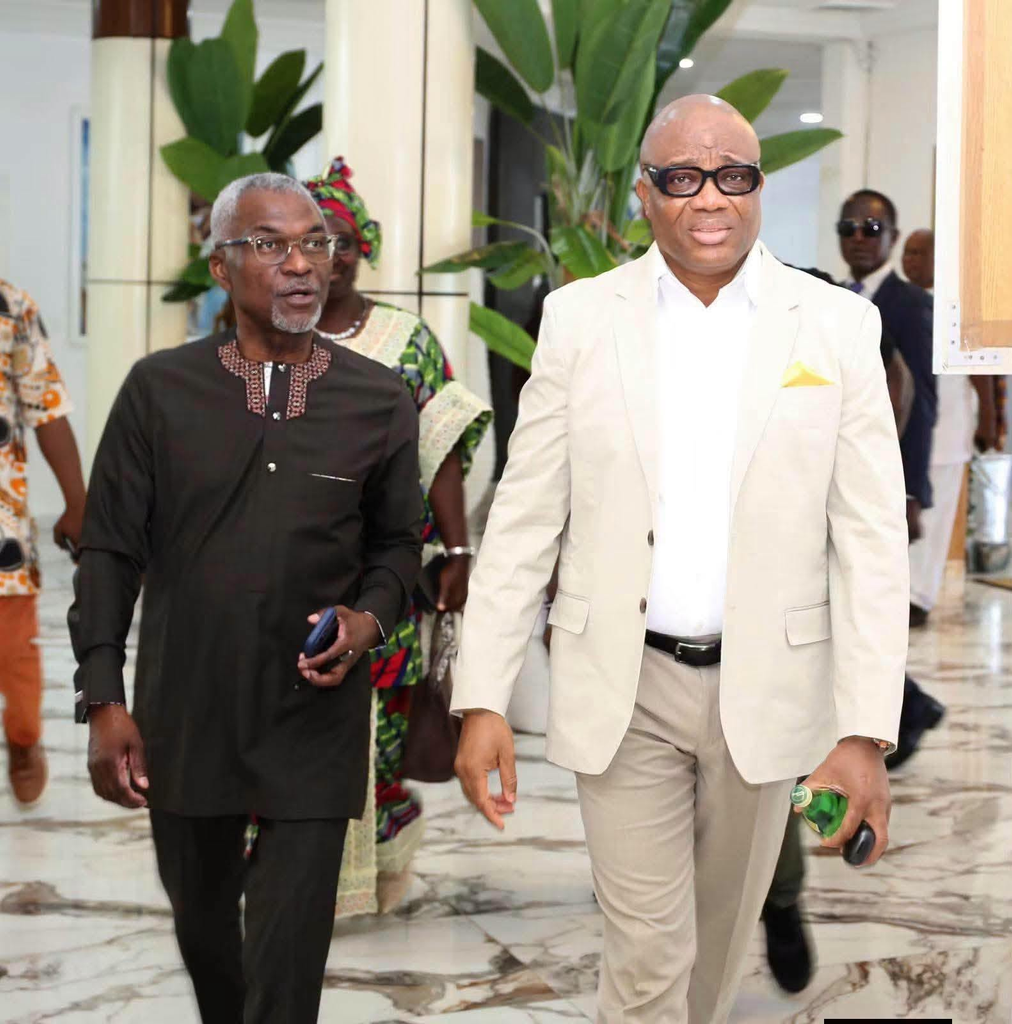
For Freeman, that cooperation could extend beyond political meetings in Monrovia.
He has spoken of joint engagements and possible county-to-county road trips in which opposition leaders would meet citizens directly, listen to their concerns and hear how Liberians believe the country should be governed. He has also referenced what he describes as the need for reforms at the National Elections Commission as one of the issues that could form part of the broader engagement.
Yet the emerging cooperation has not been without disagreement.
The Citizens Movement for Change, led by Musa Bility, chose to withdraw from the process. Bility questioned the structure and purpose of the arrangement, arguing that the parties had not sufficiently defined its leadership, objectives and direction.
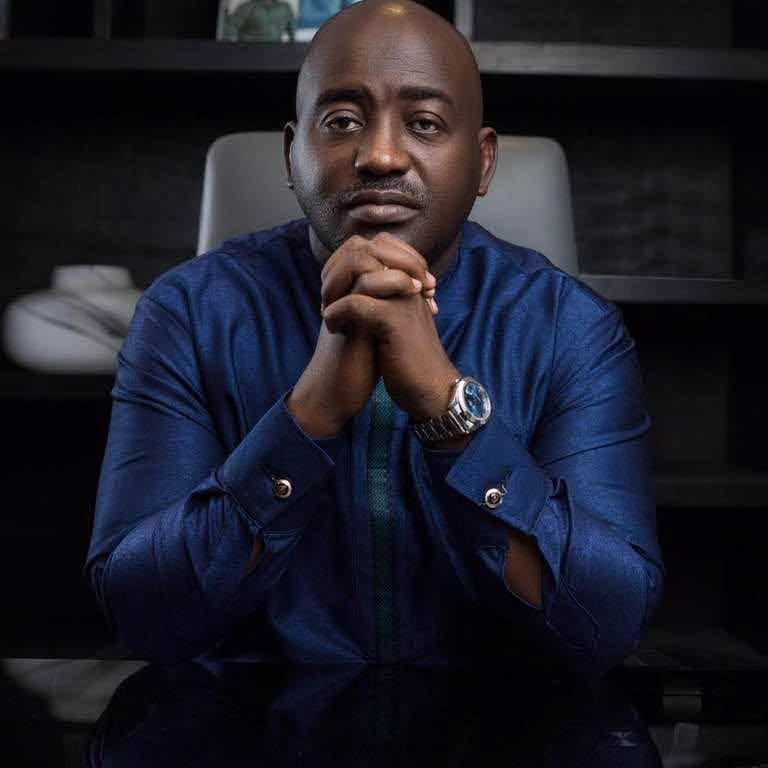
Drawing from the experience of the former Collaborating Political Parties, Bility warned that an arrangement without clearly defined structures could eventually produce internal competition and disagreements over leadership.
He also questioned the distinction being made between cooperation and an electoral alliance, arguing that the parties still need to explain clearly to Liberians what they are trying to achieve.
For Bility, another unresolved issue is the political history of the parties now sitting at the same table.
The CDC previously governed Liberia, while some of the parties now cooperating with it had opposed the CDC administration. Bility says those different political positions and histories must be reconciled before the opposition can convincingly present a united front to the Liberian people.
The withdrawal, however, did not end the cooperation.
Former President George Weah says the remaining parties met again and decided to continue together. According to Weah, some participants chose to leave, while those who remained agreed to move forward and speak with one voice.
Weah says the document they signed is not initially about deciding who will lead a future ticket. He says the discussions were centered on Liberia, the rule of law and protecting citizens.
That distinction may prove important as the opposition cooperation develops.
The parties are attempting to build a political structure without immediately turning it into an electoral ticket. Their stated approach is to work together on national issues while preserving the separate identities of the participating parties.
For the Boakai administration, the emerging arrangement could mean a more coordinated opposition voice on issues of governance and public accountability. But the opposition leaders themselves still have to demonstrate how the new cooperation will function beyond statements, meetings and joint appearances.
The questions are therefore larger than who signed the document.
Can parties with different political histories maintain a common position? Can they resolve disagreements over structure and leadership before those disagreements become internal divisions? And can the cooperation remain focused on national issues without eventually becoming an electoral alliance?
For now, the opposition leaders say they are not answering those questions through a presidential ticket.
They are starting with cooperation.
They say their immediate objective is to combine political energy, engage Liberians, challenge government where they believe it falls short and offer alternative approaches to national governance.
Whether that cooperation becomes a lasting political force—or eventually evolves into something more electoral—remains to be determined.
What is clear is that Liberia’s opposition has begun a new conversation about working together, while the disagreements surrounding its structure and future direction remain very much part of that conversation.
