

By Luke Joe
September 19, 2026
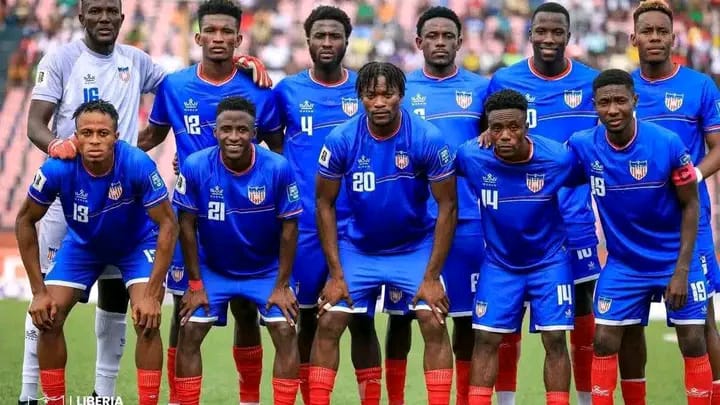
Liberia’s road to the 2027 Africa Cup of Nations begins with a difficult but potentially manageable Group K, where the Lone Star will face Mali, Cape Verde and Rwanda in a six-match home-and-away campaign.
The group contains a clear hierarchy on paper, but football is rarely decided by rankings or reputations alone. For Liberia, the central question is not whether the Lone Star can finish ahead of all three opponents, but whether it can accumulate enough points to secure one of the two qualifying places available from the group.
CAF has placed Mali in Pot One, Cape Verde in Pot Two, Rwanda in Pot Three and Liberia in Pot Four. The draw therefore reflects a significant difference in seeding, particularly between Liberia and Mali. However, CAF’s format gives Liberia a realistic mathematical route: the top two teams in Group K will qualify directly for AFCON 2027.
The tournament itself will be co-hosted by Kenya, Tanzania and Uganda from June 19 to July 17, 2027. The qualifiers will be played across six matchdays, with the opening two in September/October 2026, the next two in November and the final two in March 2027.
For Liberia, the equation is therefore straightforward: collect points consistently, protect home advantage and remain in contention when the final two matchdays arrive.
MALI: THE GROUP’S BENCHMARK
Mali represents the clearest test of Liberia’s ambitions.
The Eagles were placed in Pot One, alongside the leading seeds, while Liberia came from Pot Four. That difference in seeding makes Mali the side Liberia must approach with the greatest tactical discipline, but the two matches against Mali should not be viewed merely as opportunities to limit the damage.
The first meeting comes on September 29, when Liberia hosts Mali. That fixture could immediately test whether the Lone Star can turn home advantage into points.
A positive result against Mali would have value beyond the points themselves. It could establish confidence early in the campaign and demonstrate that Liberia can compete against the group’s highest-seeded opponent.
The challenge will be to remain organised without becoming excessively defensive. Against a team of Mali’s calibre, Liberia may have fewer opportunities in front of goal, making concentration, transition play and finishing particularly important.
CAPE VERDE: A CRITICAL SIX-POINT BATTLE
Cape Verde could arguably be just as important to Liberia’s qualification calculation.
The Blue Sharks have developed into a competitive African side and were drawn from Pot Two. Their recent international development means Liberia cannot afford to treat either meeting as a secondary fixture.
The significance of these matches lies in the potential points swing.
If Liberia can win at home against Cape Verde, the Lone Star would collect three points while simultaneously denying a direct qualification rival point. A draw away from home could also become valuable, particularly if Liberia protects its home record against Rwanda.
Cape Verde therefore represents the kind of opponent against whom Liberia’s campaign could be defined.
The objective should not necessarily be to dominate these fixtures. It should be to maximise the points available from them.
RWANDA: THE SIX POINTS LIBERIA WILL BE TARGETING
Rwanda may have entered the group from Pot Three, but that does not make them an easy opponent.
The first match of Liberia’s campaign is particularly important because it comes away to Rwanda on September 25. (Confédération Africaine de Football)
An away victory would immediately give Liberia three points and provide an ideal platform before the home meeting with Mali four days later.
But even a draw would have to be considered within the wider six-match calculation. Liberia cannot afford to approach Rwanda assuming that points are guaranteed.
The reverse fixture will be equally important.
If Liberia can take six points from Rwanda across the two meetings, it would establish a substantial foundation for a top-two challenge. If those points are lost, however, Liberia would likely have to compensate against Mali or Cape Verde.
That makes Rwanda arguably the most important opponent in terms of Liberia’s minimum points target.
THE OPENING TWO MATCHDAYS COULD SET THE TONE
Liberia’s first two fixtures are particularly demanding because they combine an away match against Rwanda with a home meeting against Mali.
September 25: Rwanda vs Liberia
September 29: Liberia vs Mali (Confédération Africaine de Football)
The ideal scenario from Liberia’s perspective would be to leave the opening window with four or six points.
Three points would keep the campaign alive but leave little margin for error.
Two points or fewer would increase the importance of the November fixtures and put greater pressure on the team to produce results against Cape Verde and Rwanda.
The opening two games therefore should not be judged independently. Together, they can establish whether Liberia enters the second phase of the campaign with momentum or with the need to recover lost ground.
WHERE QUALIFICATION COULD BE WON
Liberia’s clearest route is through its home fixtures.
Assuming Liberia hosts Mali, Cape Verde and Rwanda, the Lone Star needs to make those three matches count.
A perfect home record would produce nine points before Liberia even considers what it can collect on the road.
That would not guarantee qualification, but it would give Liberia a strong platform.
More realistically, Liberia could target:
Six points from Rwanda — two victories.
At least three points from Mali or Cape Verde — one victory.
Additional points from draws, particularly away from home.
That combination would produce at least nine points, with every additional draw increasing Liberia’s total.
The important point is that CAF has not established a fixed qualifying points threshold. The actual number required will depend on how the four teams perform against one another. (Confédération Africaine de Football)
AWAY FORM MAY BECOME THE DIFFERENCE
While home form provides the foundation, Liberia’s away results could ultimately determine whether the Lone Star finishes in the top two.
Winning away from home would obviously be valuable, but Liberia does not necessarily need to collect maximum points in every road fixture.
Avoiding defeat can be equally important.
A draw against Rwanda, Mali or Cape Verde away from home could become significant when combined with victories at home.
The coaching strategy therefore has to strike a balance between ambition and risk.
Playing too cautiously could leave Liberia without enough points. Playing too aggressively against stronger opponents could expose the team to defeats that become difficult to recover from.
THE REAL TARGET: CONSISTENCY OVER SIX MATCHES
The temptation in a group like this is to focus on individual opponents, but qualification will ultimately be determined by the complete six-match record.
A possible points model illustrates the challenge:
Target Points
Two wins against Rwanda 6
One win against Mali or Cape Verde 3
One draw in another match 1
Total 10
Ten points would give Liberia a competitive total, but it would not automatically guarantee qualification. The final standings could depend on the results of the other matches, goal difference and the distribution of points among the four teams.
A 10-point campaign could therefore be enough in one group and insufficient in another, that uncertainty makes every match significant.
GOAL DIFFERENCE COULD MATTER
Liberia should also be thinking beyond simply winning matches.
In a tightly contested four-team group, teams can finish level on points. When that happens, the relevant CAF competition regulations determine how the teams are separated, which means heavy defeats could become costly, particularly if Liberia and another team finish level on points.
The Lone Star therefore needs defensive discipline even in matches that appear to be slipping away.
A narrow defeat is very different from conceding several goals in a match that could later influence the qualification equation.
THE NOVEMBER WINDOW COULD BE THE TURNING POINT
The third and fourth matchdays will take place in November, while the final two fixtures will be played in March 2027. (Confédération Africaine de Football)
By November, Liberia should have a much clearer picture of its position.
If the Lone Star collects a strong haul from the opening two matches, the November fixtures become an opportunity to strengthen its position.
If Liberia starts poorly, however, those matches become recovery games, increasing the pressure on players and coaches.
The objective should therefore be to avoid entering November in a position where every fixture becomes a must-win.
MALI AND CAPE VERDE ARE NOT THE ONLY THREATS
Another important consideration is that Mali, Cape Verde and Rwanda will also take points from one another.
This could work in Liberia’s favour.
For example, if Mali and Cape Verde repeatedly draw against each other, they would both drop points that Liberia could potentially exploit.
Similarly, an unexpected Rwanda victory over one of the group’s higher-seeded teams could completely change the standings; that is why Liberia should concentrate less on reputations and more on the points available in each individual fixture.
WHAT WOULD A SUCCESSFUL CAMPAIGN LOOK LIKE?
For Liberia, success would require three things.
First, protect home advantage. The Lone Star cannot expect to qualify while regularly dropping points on home soil.
Second, take Rwanda seriously. The two Rwanda fixtures provide Liberia with perhaps its clearest opportunity to build a substantial points base.
Third, compete against Mali and Cape Verde. Liberia does not have to win every match against the two higher-seeded opponents, but it needs to take points from at least some of those encounters and that is where the campaign could ultimately be decided.
SIX MATCHES, ONE OBJECTIVE
Liberia’s Group K draw is difficult, but it is not a mathematical dead end.
Mali brings the strongest seeding. Cape Verde brings considerable recent international development. Rwanda presents a competitive opponent that Liberia cannot afford to underestimate. Liberia itself enters from Pot Four and must therefore overcome the disadvantage of its seeding, but the qualification system does not require Liberia to finish first.
The top two teams advance and this changes the nature of the challenge.
The Lone Star does not need perfection. It needs consistency, tactical discipline, effective use of home advantage and enough points to remain above at least two of its three opponents when the final standings are calculated.
The first test comes on September 25 away to Rwanda.
Four days later, Mali arrives for the first home examination.
Those two matches will not decide Liberia’s qualification campaign, but they could provide an early indication of whether the Lone Star is building a serious challenge for AFCON 2027—or preparing for another difficult road to the continental finals.
