

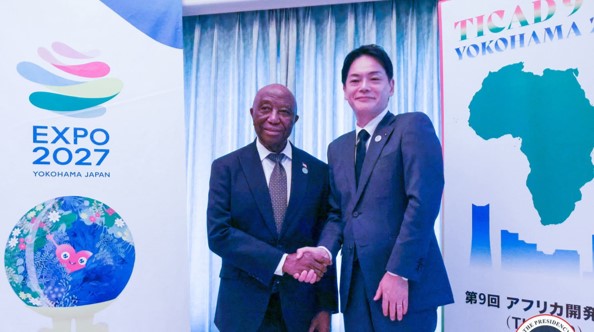
By Konah Rufus
The Government of Liberia says it emerged from the Ninth Tokyo International Conference on African Development (TICAD 9) with a range of new partnerships and opportunities aimed at boosting infrastructure, agriculture, education, youth empowerment, health, and governance.
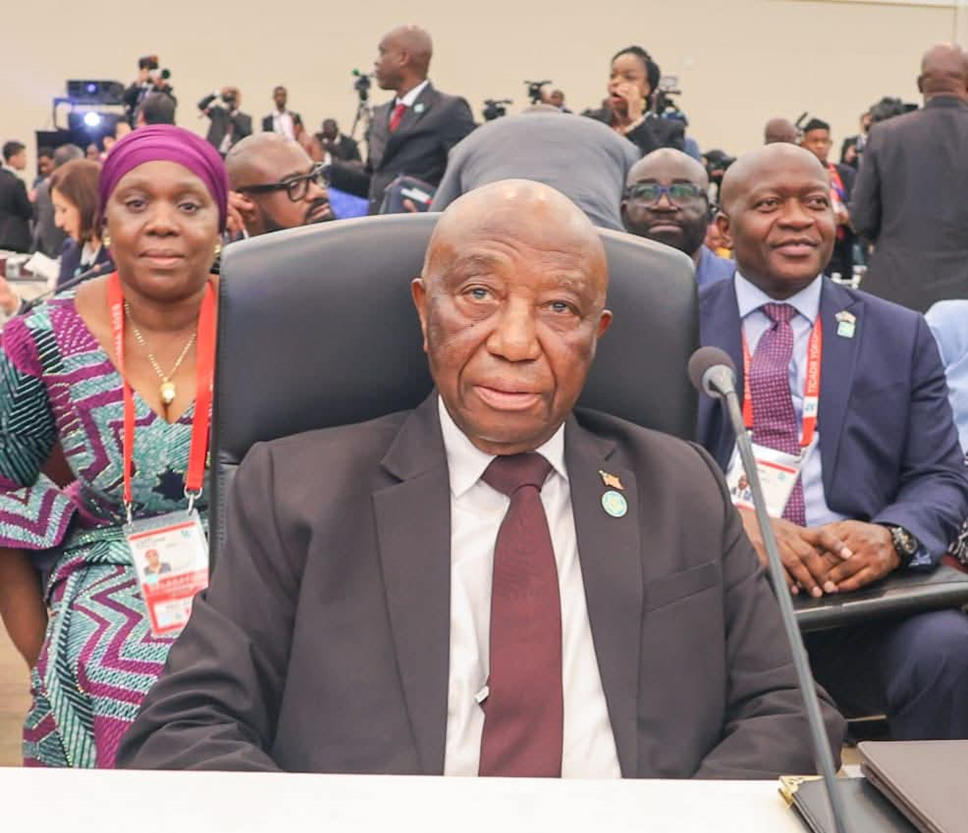
The conference was held in Yokohama, Japan, under the theme “Co-Creating Solutions for Africa’s Future.” President Joseph Boakai led a 40-man delegation, including 23 top and middle level officials and other support staff, security and protocol personnel.
At the forum, Japanese Prime Minister Ishiba Shigeru renewed his country’s commitment to Liberia and Africa, focusing on private sector-led sustainable growth, youth and women empowerment, and regional integration. The Government says, Liberia is among the countries to benefit significantly from the Japanese’s development aid.
Key Economic and Infrastructure Gains
Monrovia-RIA Corridor: According to the government, Japan agreed to fund feasibility studies for the Monrovia–Roberts International Airport corridor and rehabilitation of farm-to-market roads to strengthen regional trade.
Port Modernization: Liberia was included in the Japan-Africa Economic Partnership Study Group, paving the way for technical support to modernize the Freeport of Monrovia and improve logistics.
Industrial Cooperation: Through the Japan-Africa Co-Creation for Industry Initiative, Liberian startups in ICT, agribusiness, and clean energy is expected to receive matchmaking support with Japanese companies, the Liberian government has disclosed.
Financing Access: The Government further indicated that the will benefit from Japan’s USD $5.5 billion Enhanced Private Sector Assistance for Africa and a USD $1.5 billion impact investment fund designed to reduce investor risk in energy and agriculture.
Sea Defense Partnership: Japan, the government noted, has expressed interest in working with Liberia on coastal defense and waste management, given the country’s vulnerability to climate change and rising sea levels.
Agriculture and Food Security
Liberia is expected to participate in pilot projects for climate-resilient rice varieties in Lofa and Bong Counties. The JICA is expected to support an expanded mechanized farming project, while access to Japanese irrigation technologies and post-harvest value chains will help reduce food imports.
Human Capital Development
According the Government of Liberia, at least 500 Liberian youths and professionals will be trained under Japan’s Africa-wide skills program in AI, biotechnology, and green economy fields.
The Japanese’s assistance will engender new scholarships and exchanges have been secured under the ABE Initiative and Africa Youth Program 2025, particularly in STEM, public health, and governance.
Health and Social Development
Liberia is also expected to benefit from upgraded referral hospitals, medical equipment, and training under Japan’s African Healthcare Investment Promotion Package. The country is expected also share in Japan’s USD 550 million contribution to GAVI, boosting vaccine access and health resilience.
Peace, Stability, and Governance
Liberia’s maritime sector will receive capacity-building support to combat illegal fishing and enhance coast guard readiness. The country has been included in Japan’s Africa Mine Action Platform and peacebuilding initiatives, opening space for governance training and youth involvement in peace efforts.
Liberia has submitted a USD $72 million funding proposal, covering infrastructure, health, education, and agriculture. The proposal is under review by the Japanese government.
Meanwhile, the Ministry of Foreign Affairs will set up a TICAD 9 Implementation Desk to monitor progress and provide quarterly updates to the public.
According to the Ministry of Foreign Affairs, these outcomes reflect Liberia’s successful engagement at TICAD 9 and underscore the government’s determination to translate international partnerships into sustainable development and improved livelihoods for the Liberian people.
The TICAD 9 conference has generated enormous debate in the Liberian community. Some say other countries may have benefited from the Japanese government more that the Boakai administration.
For instance, the Ghanaian Foreign Ministry outlined the benefit of Ghana from the TICAD 9 confab to include, a bridge between Volivo to Dorfor Adidome across the Volta River has been revived, the Kumasi inner city ring way project to commence shortly, a new agreement signed with Toyota to expand its operations in Ghana and make Ghana its West African hub, and a groundbreaking space agreement signed with Japan to leverage space science for Ghana’s development.
The Ghanaian government will benefit from training of a targeted 300,000 youth in AI, modern agriculture, green transition, tech-startups, and biotechnology, a special cooperation anchored on latest scientific research to boost rice production in Ghana and attain food security, a US$100 million secured for new agricultural projects, and a strategic industrialization partnership with Japan as Japan considers investing a dedicated US1.5 billion in Africa in the short term.
